Related Articles


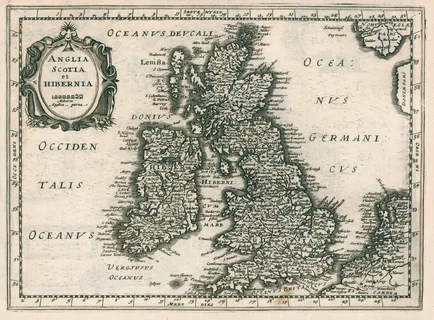
The history of the United Kingdom is shaped by centuries of migration, warfare, political change, royal dynasties, and cultural development. The modern United Kingdom did not emerge as one country overnight. Instead, it developed through a long series of unions involving England, Scotland, Wales, and Ireland.Understanding British history requires looking beyond modern borders. Different kingdoms existed across the British Isles before political unions gradually changed their relationships. England became increasingly powerful, Wales became closely integrated with England, Scotland eventually joined a political union, and Ireland experienced a particularly complicated relationship with Britain.
The United Kingdom later became one of the world’s most influential political, industrial, military, and commercial powers. Its history includes achievements in science, technology, literature, government, and industry. However, it also includes colonialism, warfare, slavery, political inequality, and conflicts over national identity.Today, the United Kingdom consists of England, Scotland, Wales, and Northern Ireland. Its constitutional system combines parliamentary democracy with a constitutional monarchy. This modern arrangement reflects centuries of political development.
1. Britain Before the United Kingdom
Long before the United Kingdom existed, the British Isles were inhabited by different peoples and communities. Celtic-speaking peoples lived across much of Britain and Ireland before Roman expansion reached the islands.The Roman conquest began in AD 43 under Emperor Claudius. Roman forces established control over much of present-day England and Wales, although northern Britain remained difficult to control.
The Romans constructed roads, towns, forts, and defensive structures throughout their territories. Hadrian’s Wall became one of the most famous Roman defensive projects in Britain.Roman authority eventually weakened, and Roman forces withdrew from Britain during the early fifth century. Their departure created political instability and allowed new kingdoms and communities to develop.The following centuries witnessed major migration and settlement by Germanic peoples. Angles, Saxons, and Jutes established kingdoms across much of eastern and southern Britain.These kingdoms eventually contributed to the development of what became England.
2. The Development of England
During the early medieval period, several Anglo-Saxon kingdoms existed across England. These kingdoms competed for territory and political influence.Kingdoms such as Wessex, Mercia, Northumbria, and East Anglia played important roles. Over time, Wessex became particularly influential.Alfred the Great of Wessex became one of the best-known early English rulers. He defended his kingdom against Viking attacks and promoted learning and administration.
His successors expanded control over territories previously governed by different Anglo-Saxon rulers.By the tenth century, a more unified English kingdom had emerged. However, Viking influence remained significant across northern and eastern England.The English monarchy continued developing as political institutions became more sophisticated.
3. The Norman Conquest Changed England
One of the most important events in British history occurred in 1066. William, Duke of Normandy, invaded England after claiming the English throne.William defeated King Harold II at the Battle of Hastings in October 1066. He subsequently became King William I of England.The Norman Conquest transformed English society, government, land ownership, architecture, and language. Norman rulers introduced new administrative practices and strengthened royal authority.
Large castles were constructed across England to demonstrate royal power and control important territories.The Domesday Book was commissioned by William I during the late eleventh century. It recorded extensive information about landholding, property, and resources.The Norman period therefore established foundations that influenced English government for centuries.
4. Wales Became Part of England
Wales had its own rulers, communities, languages, and political traditions for centuries. English kings gradually expanded their authority into Welsh territories.Military campaigns and political agreements produced changing relationships between Welsh rulers and English monarchs.Edward I launched major campaigns against Welsh resistance during the late thirteenth century. Following the defeat of Llywelyn ap Gruffudd, English control over Wales became much stronger.
The Statute of Rhuddlan in 1284 established English administrative control over much of Wales.The Laws in Wales Acts of the sixteenth century later incorporated Wales more fully into the English legal and administrative system.Wales therefore became closely integrated with England long before the creation of the modern United Kingdom.
5. England and Scotland Remained Separate Kingdoms
For centuries, England and Scotland existed as separate kingdoms. Their relationship involved periods of warfare, diplomacy, royal marriage, and political rivalry.The border between the two kingdoms witnessed repeated military conflicts during the medieval period.
William Wallace and Robert the Bruce became important figures during Scotland’s Wars of Independence. Robert the Bruce eventually secured a major Scottish victory against England at the Battle of Bannockburn in 1314.Scotland retained its independent monarchy and political institutions for centuries.However, royal succession eventually created an unexpected connection between the two kingdoms.In 1603, James VI of Scotland inherited the English and Irish crowns after the death of Elizabeth I. He became James I of England.This event created a union of crowns, but England and Scotland remained separate states.
6. The Acts of Union Created Great Britain
The political relationship between England and Scotland changed significantly in 1707.
The Acts of Union created the Kingdom of Great Britain. The separate English and Scottish parliaments were replaced by a Parliament of Great Britain.The union resulted from political, economic, and strategic considerations. Scotland had experienced financial difficulties following unsuccessful colonial ventures, while England wanted greater political security.The union was controversial in Scotland and faced opposition from sections of Scottish society.Nevertheless, the new Kingdom of Great Britain became a major European power.The political union did not erase Scottish identity. Scotland retained important legal, educational, religious, and cultural institutions.This distinction remains important when understanding the United Kingdom today.
7. Ireland and the Creation of the United Kingdom
Ireland’s relationship with England and Britain was particularly complex. English involvement in Ireland developed over many centuries and frequently generated resistance.The Kingdom of Ireland was formally established under the Crown in the sixteenth century. Political and religious conflicts continued for generations.The Act of Union of 1800 created the United Kingdom of Great Britain and Ireland. The new political arrangement came into effect in 1801.
However, Irish nationalism continued growing throughout the nineteenth century.The Great Famine of the 1840s caused enormous suffering and contributed to long-term political resentment.Movements seeking Irish self-government eventually became stronger.The early twentieth century brought revolutionary conflict and political negotiations that eventually changed Britain’s relationship with Ireland.
8. The Industrial Revolution Transformed Britain
Britain played a leading role in the Industrial Revolution. Beginning during the eighteenth century, industrialisation transformed production, transportation, employment, and urban life.Coal, iron, steam power, mechanised textiles, and engineering became central to Britain’s economic development.Factories expanded rapidly, particularly in northern England, Scotland, Wales, and the Midlands.
Cities grew as workers moved from rural communities toward industrial employment.The development of railways transformed domestic transportation and commerce. Steamships also expanded Britain’s international trading connections.Industrialisation generated enormous wealth but created serious social problems. Factory workers often faced dangerous conditions, long working hours, poor housing, and low wages.
These problems eventually encouraged labour reforms and the development of stronger worker protections.
9. Britain Became a Major Global Power
During the eighteenth and nineteenth centuries, Britain developed an extensive global empire.British influence expanded through trade, military conquest, colonisation, diplomacy, and commercial activity.At its height, the British Empire controlled territories across Africa, Asia, the Americas, Oceania, and other regions.London became one of the world’s leading financial and commercial centres.
British naval power supported international trade and military expansion.The empire contributed to Britain’s wealth and global influence, but its history also involved exploitation, coercion, racial inequality, and political domination.The transatlantic slave trade was another important and deeply troubling part of British history. Britain became heavily involved in slave trading before Parliament abolished Britain’s slave trade in 1807.Slavery itself was abolished throughout most of the British Empire in 1833, followed by compensation to slave owners rather than enslaved people.The legacy of empire continues influencing political and cultural discussions today.
10. The Growth of Parliamentary Government
The British political system gradually evolved from a monarchy with significant royal authority toward parliamentary government.The Magna Carta of 1215 is often associated with the development of limits on royal power. Although its original purpose differed from modern democratic principles, later generations interpreted it as an important symbol of constitutional government.The seventeenth century brought serious conflicts between monarchy and Parliament.The English Civil Wars began in 1642 between supporters of King Charles I and Parliament.Charles I was executed in 1649, and England temporarily became a republic known as the Commonwealth.The monarchy was restored in 1660 under Charles II.Later conflicts culminated in the Glorious Revolution of 1688. William III and Mary II became monarchs, while Parliament strengthened its constitutional position.
11. The Expansion of Voting Rights
For much of British history, political participation was restricted to a relatively small portion of the population.The nineteenth century witnessed major reforms to Britain’s electoral system.The Reform Acts expanded voting rights and changed parliamentary representation.Industrial cities gained greater political representation as Britain became increasingly urban.Working-class political movements also became more influential.The Representation of the People Acts gradually expanded voting rights during the twentieth century.Women eventually gained equal voting rights with men under the Representation of the People Act 1928.These changes transformed Britain from a limited parliamentary system into a much broader democracy.
12. Britain During the First World War
The First World War began in 1914 and had enormous consequences for Britain.British forces fought alongside allies against Germany and the Central Powers.Millions of people were affected by military mobilisation, shortages, casualties, and economic disruption.The war placed considerable financial pressure on Britain and changed British society.Women entered many occupations previously dominated by men because millions of men were serving in the armed forces.After the war, Britain remained an important global power but faced significant economic and political challenges.The conflict also strengthened nationalist movements across parts of the British Empire.
13. The Second World War
The Second World War became another defining moment in British history.Britain declared war on Germany in September 1939 after Germany invaded Poland.Winston Churchill became Prime Minister in 1940 and led Britain during its most difficult wartime period.The Battle of Britain, the Blitz, and the wider European conflict placed enormous demands upon British society.Civilians experienced bombing, rationing, shortages, evacuation, and extensive government control.Britain eventually achieved victory alongside its allies in 1945.However, victory came at enormous financial and human cost.The war weakened Britain’s economic position and accelerated the decline of its global imperial influence.
14. The Welfare State and Post-War Britain
After the Second World War, Britain underwent major social and political transformation.The Labour government elected in 1945 introduced extensive reforms.The National Health Service was established in 1948, providing healthcare through a publicly funded system.Social security and welfare programmes also expanded.The government increased public involvement in industries such as coal, railways, and electricity.These reforms reflected the belief that the state should provide greater protection against poverty, illness, unemployment, and poor living conditions.The post-war period therefore established institutions that remain central to British society.
15. The Decline of the British Empire
After 1945, Britain gradually withdrew from many colonial territories.India became independent in 1947, marking one of the most important moments in the decline of British imperial rule.Many other countries across Africa, Asia, the Caribbean, and the Middle East later achieved independence.The process was sometimes peaceful, but other transitions involved political conflict and violence.The decline of empire changed Britain’s international identity.Britain increasingly focused on its role as an independent European and global power rather than as the centre of a vast empire.The Commonwealth developed as an association connecting many former British territories and other countries.
16. Ireland’s Changing Relationship With Britain
Ireland experienced major political changes during the twentieth century.The Anglo-Irish Treaty of 1921 led to the creation of the Irish Free State in most of Ireland.Northern Ireland remained part of the United Kingdom.The Republic of Ireland later became fully independent outside the British state.Northern Ireland experienced decades of political and sectarian conflict known as the Troubles.
The Good Friday Agreement of 1998 established a political framework that significantly reduced violence.Northern Ireland remains part of the United Kingdom, while its constitutional status can change through a democratic process under specific conditions.
17. Britain and European Integration
After the Second World War, Britain developed a complicated relationship with European integration.The United Kingdom joined the European Economic Community in 1973.Membership later became a major political issue.In 2016, British voters participated in a referendum on European Union membership.A majority voted to leave the European Union.The United Kingdom formally left the European Union in January 2020.This process, commonly known as Brexit, represented one of the most significant political changes in modern British history.Britain continues developing its economic, diplomatic, and security relationships with European countries after leaving the EU.
18. The United Kingdom’s Constitutional Monarchy
The modern United Kingdom is a constitutional monarchy.The monarch serves as head of state, while political power is exercised primarily through elected government and Parliament.The monarch’s constitutional responsibilities are largely formal and ceremonial under modern conventions.The United Kingdom does not have one single written constitutional document. Instead, its constitutional system includes laws, conventions, judicial decisions, treaties, and established political practices.Parliament consists of the House of Commons and House of Lords.The Prime Minister leads the government and normally comes from the political party capable of commanding confidence in the House of Commons.
This system developed gradually rather than being created through one constitutional event.
19. The United Kingdom Today
The modern United Kingdom contains four constituent countries: England, Scotland, Wales, and Northern Ireland.Each has its own history and distinctive cultural identity.Scotland has its own legal and educational traditions. Wales has its own language and national institutions. Northern Ireland has a distinctive constitutional and political history.Devolution has transferred certain powers from Westminster to institutions in Scotland, Wales, and Northern Ireland.England does not have a separate devolved national parliament equivalent to those institutions.These arrangements continue evolving as debates about national identity and political autonomy remain active.
FAQ
When was the United Kingdom officially created?
The United Kingdom of Great Britain and Ireland was created in 1801 through the Acts of Union.
Which countries make up the United Kingdom today?
The United Kingdom consists of England, Scotland, Wales, and Northern Ireland.
When did Scotland join England politically?
England and Scotland formed the Kingdom of Great Britain through the Acts of Union in 1707.
Why is the Industrial Revolution important to UK history?
The Industrial Revolution transformed Britain’s economy, cities, transportation, manufacturing, employment, and international influence.
How did the British Empire affect UK history?
The British Empire expanded Britain’s global influence while also creating complex legacies involving colonialism, trade, migration, conflict, and cultural exchange.
